Structural Drying Norcross GA (888) 959-1198

Structural Drying Services in Norcross, GA

Gwinnett County receives over 52 inches of rainfall annually on Georgia's low-permeability red clay soil — a combination that directs water toward foundations faster than virtually any other soil type in the Southeast. When water enters your home through a burst pipe, storm breach, or crawl space intrusion, IICRC-certified structural drying technicians arrive within 60 minutes with industrial LGR dehumidifiers and air movers calibrated for Metro Atlanta's humid subtropical climate, where ambient humidity of 68-72% in summer means standard drying methods fail.

Call Now: (888) 959-1198
60 Min Emergency Response Across Gwinnett County
52 in. Average Annual Rainfall in Norcross
24/7 Emergency Availability Year-Round
IICRC Certified Structural Drying Technicians

Structural Drying Services in Norcross

Structural drying in Gwinnett County requires equipment and techniques calibrated for Georgia's specific challenges — red clay soil that channels water toward foundations, summer humidity that renders household fans useless, crawl space construction that traps moisture beneath floor systems, and hardwood flooring that demands specialized salvage techniques. Generic drying approaches designed for drier climates underperform here.

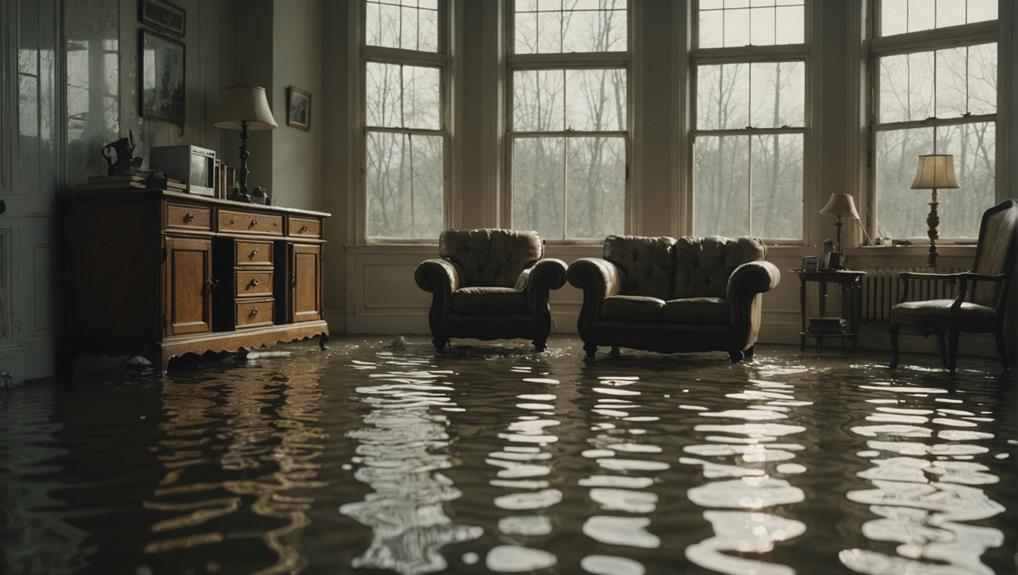
Emergency water extraction and structural drying equipment in Norcross GA

Emergency Extraction and Drying

Truck-mounted extraction units remove standing water while industrial LGR dehumidifiers and centrifugal air movers begin structural drying simultaneously. LGR (Low Grain Refrigerant) technology is essential in Norcross because standard dehumidifiers lose efficiency above 55% relative humidity — a threshold Georgia exceeds 7-8 months per year. Equipment placement follows IICRC S500 psychrometric principles to create optimal evaporation conditions across every affected material.

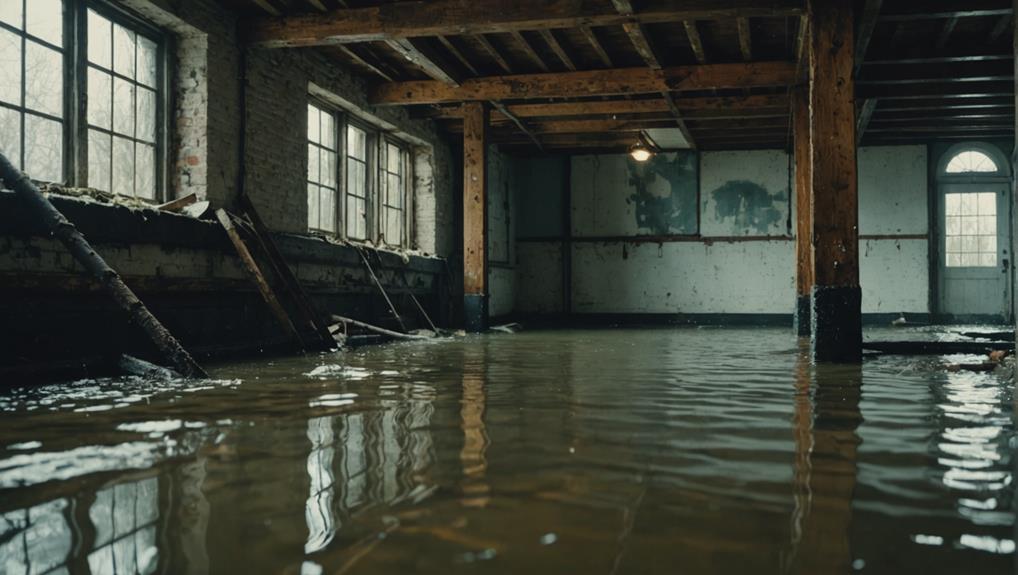
Crawl space drying and moisture remediation in Gwinnett County GA

Crawl Space Drying

Gwinnett County's red clay soil holds moisture for weeks after rain events, continuously releasing humidity into crawl spaces. Our crawl space drying addresses both the immediate water event and the chronic moisture conditions that caused or worsened it. Services include standing water extraction, structural drying of floor joists and subfloor sheathing, antimicrobial treatment, and vapor barrier assessment. For homes with persistent crawl space issues, we recommend full encapsulation: sealed vents, 20-mil vapor barrier, and a dedicated dehumidifier maintaining humidity below 55%.

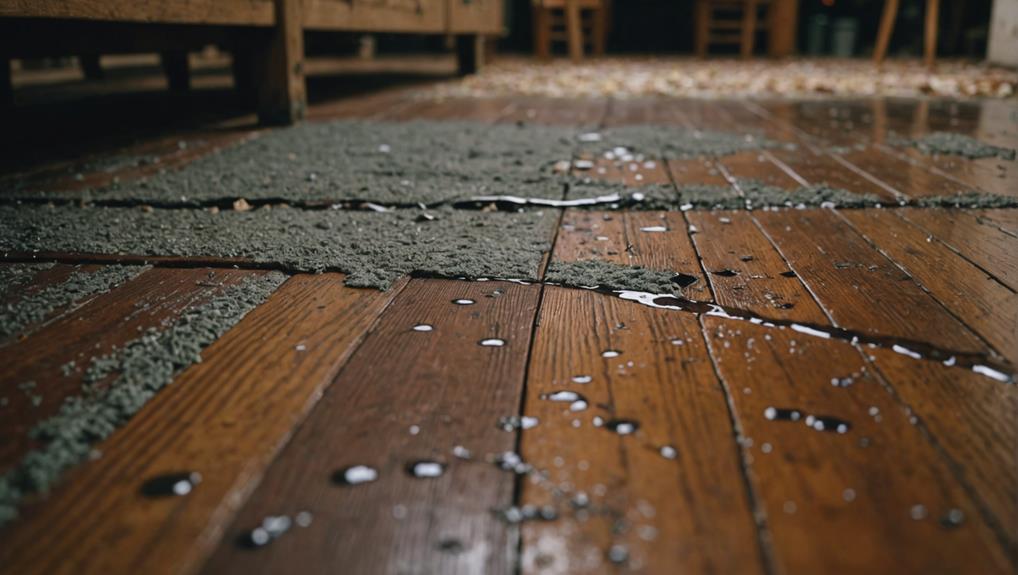
Hardwood floor drying and salvage in Norcross GA home

Hardwood Floor Drying and Salvage

Many Norcross and Peachtree Corners homes feature solid hardwood flooring that can be saved through professional in-place drying if addressed within 24-48 hours. We use mat drying systems and tent drying techniques that extract moisture from the wood surface while air movers and dehumidifiers remove humidity from the room. Moderate cupping typically reverses as moisture equalizes over 1-3 weeks after drying. Floors over crawl spaces require simultaneous above-and-below drying to prevent re-wetting from subsurface moisture.

What to Expect During Structural Drying

Structural drying follows the IICRC S500 Standard for Professional Water Damage Restoration, adapted for Gwinnett County's specific climate and construction conditions. Understanding the process — what equipment will be in your home, how long it runs, and what the daily monitoring measures — helps you set realistic expectations.

How Structural Drying Works
The drying system creates three conditions simultaneously: airflow across wet surfaces (air movers directed at walls, subfloors, and cavities accelerate surface evaporation), low humidity (LGR dehumidifiers remove moisture from the air, creating a vapor pressure differential that pulls moisture out of materials), and controlled temperature (warmer air holds more moisture vapor, increasing evaporation rates). Technicians calculate the specific grain depression (moisture removal capacity) needed based on the volume of affected space, material types, and ambient conditions — this is why professional drying uses psychrometric science, not guesswork.
Daily Moisture Monitoring
Technicians visit daily to take moisture readings at every mapped test point using pin-type meters (inserted into wood and drywall to measure internal moisture content) and pinless capacitance meters (scanned across surfaces for non-destructive readings). Readings are documented on a drying log that tracks progress toward the dry standard: below 15% for wood framing, below 16% for drywall, and below 1% relative humidity differential for concrete. Infrared thermal cameras identify hidden moisture pockets behind walls and under floors. Equipment is repositioned as drying progresses to focus on remaining wet areas.
Equipment in Your Home
A typical residential structural drying setup includes 4-8 centrifugal air movers (each about the size of a small stool, producing 2,500+ CFM of directed airflow) and 1-2 LGR dehumidifiers (approximately the size of a large suitcase, draining continuously via hose to a sink or exterior). Equipment runs 24 hours a day during the drying period. Air movers produce a consistent humming noise (approximately 55-65 dB — comparable to a conversation). Electrical consumption for a typical residential setup is 15-25 kWh/day, adding roughly $3-$6/day to your utility bill. Equipment is not removed until moisture readings confirm all materials have reached the dry standard.
Timeline by Situation
Single-room water damage (Category 1 clean water): 3-4 days. Multi-room residential drying: 4-6 days. Crawl space drying after flooding: 5-7 days. Hardwood floor salvage drying: 5-7 days (with additional 2-3 weeks for floor equalization before refinishing). Concrete slab drying: 5-8 days. Georgia's summer humidity (June-September) typically adds 1-2 days compared to winter drying. Category 2 and 3 events add time for antimicrobial treatment and potential demolition of contaminated porous materials.

The goal of structural drying is to return all building materials to their normal moisture content — not just surface-dry, but genuinely dry throughout. Materials that appear dry on the surface can hold dangerous levels of moisture internally, which is why daily pin-type meter readings inside the material (not just on the surface) are essential. Stopping drying too early is the most common cause of secondary mold growth.

Common Norcross Structural Drying Scenario

This illustrative example reflects a typical structural drying project based on conditions commonly encountered in Norcross and Gwinnett County. It demonstrates the scope, timeline, and cost factors specific to this area's construction, soil, and climate.

Property
2,400 sq ft split-level home in the Summerour Middle School district (built 1988), wood-frame construction with hardwood floors over a partial crawl space and partial slab, brick veneer exterior on Georgia red clay lot with moderate slope toward the rear
Situation
Supply line to upstairs bathroom burst at a compression fitting while homeowners were away for a weekend (approximately 36 hours of running water). Water saturated the upstairs bathroom, traveled through the floor into the main-level den directly below, and migrated through the subfloor into the adjacent kitchen. Approximately 900 sq ft of affected area across two levels. Category 1 (clean municipal water from Gwinnett County Water Resources).
Challenges
The main-level den featured 3/4-inch red oak hardwood flooring (original 1988 installation, nail-down over plywood subfloor on crawl space). Cupping was visible but moderate — floors were candidates for in-place drying rather than replacement. The crawl space beneath the den was already at 72% relative humidity before the pipe failure (typical for un-encapsulated Gwinnett County crawl spaces in summer), complicating subfloor drying from below. Kitchen vinyl tile over slab required partial removal to verify slab moisture levels beneath. July timing meant outdoor humidity of 74%, requiring maximum LGR dehumidification capacity.
Restoration Scope
Emergency extraction from all three affected areas. Mat drying system deployed on 400 sq ft of hardwood flooring. Flood cuts (2-foot drywall removal along baseboards) on 60 linear feet of den and kitchen walls. Crawl space: standing water extraction, 4 air movers and 1 LGR dehumidifier directed at subfloor and floor joists. Main and upper levels: 6 air movers and 2 LGR dehumidifiers. Kitchen vinyl: 80 sq ft removed for slab moisture assessment and drying. Five days of structural drying with daily monitoring at 22 mapped test points.
Timeline
Day 1: Emergency response, extraction, flood cuts, mat drying system placement, equipment setup in crawl space. Days 2-5: Structural drying with daily moisture monitoring (one additional day added due to July humidity slowing crawl space dry-out). Day 6: Drying verification — all materials confirmed at or below IICRC dry standard. Equipment removal. Days 8-16: Reconstruction — drywall repair, kitchen vinyl replacement, baseboard reinstallation, paint. Hardwood floors: equalization monitored for 3 weeks post-drying, light sanding and two coats polyurethane at week 4.
Cost Range
$5,800-$8,200 total for structural drying and extraction (extraction: $600-$900; equipment rental and monitoring for 5 days: $2,800-$3,800; flood cuts and demolition: $800-$1,200; hardwood mat drying: $600-$1,000; crawl space drying: $1,000-$1,300). Reconstruction (drywall, vinyl, baseboard, paint, hardwood refinishing) added $3,500-$5,000. Homeowner's HO-3 policy covered the sudden pipe failure minus $1,000 deductible. The crawl space's pre-existing moisture condition was not covered, but the homeowner elected to add a vapor barrier ($1,800-$2,500) to prevent future issues.

Norcross Structural Drying Risk Factors

Norcross and Gwinnett County present a specific combination of soil, climate, and construction factors that affect how water damage occurs and how structural drying must be performed. These aren't generic challenges — they're conditions unique to this part of Metro Atlanta.

Georgia Red Clay (Cecil Soil Series)
Norcross sits on the Cecil soil series — the Piedmont region's characteristic red clay derived from weathered granite and gneiss. This soil has an infiltration rate of just 0.2-0.6 inches per hour, meaning any rainfall above that intensity becomes surface runoff. The clay's low permeability directs water directly toward foundation walls, crawl space vents, and any gap in the building envelope. After heavy rain, the clay continues releasing stored moisture as vapor for days or weeks, keeping crawl spaces and basements humid long after the storm passes. Grading around Norcross homes must maintain a minimum 6-inch drop over the first 10 feet from the foundation — but many older homes have settled soil that now directs water toward the house rather than away.
Humid Subtropical Climate
Norcross's humid subtropical climate (Koppen Cfa) produces average relative humidity of 68-72% from May through September, with dewpoints regularly exceeding 70°F during summer months. This humidity makes structural drying fundamentally different from drying in arid climates — ambient air cannot absorb significant additional moisture, so mechanical dehumidification (LGR technology) does the heavy lifting rather than airflow alone. Summer drying projects typically take 1-2 days longer than winter projects due to this humidity differential. The region's 52+ inches of annual rainfall — 20% above the national average — combined with intense summer thunderstorms producing 2-4 inches per hour creates frequent water intrusion events.
Construction Types
Norcross homes span several construction eras and types. Older homes (1960s-1980s) in established neighborhoods near downtown Norcross and Beaver Ruin Road are typically wood-frame with crawl spaces, brick veneer, and hardwood floors — these homes have the most complex drying requirements because moisture affects both the crawl space and living areas simultaneously. Split-level homes (very common in 1970s-1980s Gwinnett County) present unique challenges because water on the upper level migrates through the floor system into mid-level and lower-level spaces. Newer construction in subdivisions along Peachtree Industrial and Jimmy Carter corridors tends toward slab-on-grade with engineered wood or laminate flooring — faster to dry but flooring is often less salvageable.
Crawl Space Vulnerability
A significant percentage of Norcross and Peachtree Corners homes (particularly those built before 2000) have vented crawl spaces — a construction practice that was standard for decades but is now recognized as a moisture problem in the Southeast. Open foundation vents pull humid outdoor air into the crawl space, where it contacts cooler surfaces (floor joists, subfloor, ductwork) and condenses. Combined with moisture continuously rising from the red clay beneath, un-encapsulated crawl spaces in Gwinnett County routinely run at 70-85% relative humidity in summer — well above the 60% threshold for mold growth. This chronic baseline moisture makes any additional water event (pipe leak, storm flooding) more damaging because materials are already partially saturated.
Commercial Properties
Norcross's position along the I-85 Technology Corridor, Jimmy Carter Boulevard commercial district, and Peachtree Industrial Boulevard creates significant demand for commercial structural drying. Multi-tenant office buildings, warehouse-to-office conversions (common along Indian Trail-Lilburn Road), and retail centers face unique challenges: sprinkler system failures can flood multiple suites simultaneously, HVAC condensate issues affect large ceiling cavities, and business interruption pressure requires faster equipment deployment and extended operating hours. Commercial drying equipment volumes are typically 3-5x residential setups.

Norcross Structural Drying Cost Ranges

Structural drying costs in Norcross and Gwinnett County reflect Metro Atlanta labor rates and the additional drying time required by Georgia's humid climate. These ranges represent typical residential projects — commercial projects are quoted based on square footage and complexity.

Single-Room Structural Drying
$1,200-$3,500 for Category 1 (clean water). Includes extraction, 3-4 days of drying equipment (2-3 air movers + 1 LGR dehumidifier), daily moisture monitoring with documentation, and equipment removal after verification. Category 2 (gray water) adds $500-$1,000 for antimicrobial treatment.
Multi-Room Residential Drying
$3,000-$7,000 for 2-4 rooms with Category 1 water. Includes extraction, flood cuts if needed, 4-6 days of drying with 4-8 air movers and 1-2 LGR dehumidifiers, daily monitoring at multiple mapped test points, and moisture verification. Does not include reconstruction.
Crawl Space Drying
$1,500-$4,500 depending on crawl space size and moisture severity. Includes standing water extraction, 5-7 days of dedicated drying equipment in the crawl space, antimicrobial treatment of floor joists and subfloor, and moisture verification. Crawl space encapsulation (recommended for long-term prevention) adds $2,500-$6,000 depending on square footage.
Hardwood Floor Drying (In-Place Salvage)
$400-$1,200 for mat drying system deployment in addition to room drying costs. Successfully salvaging hardwood floors typically saves $8-$15 per square foot versus replacement — on a 400 sq ft floor, that's a savings of $3,200-$6,000. Post-drying refinishing (sanding + 2 coats polyurethane) costs $3-$5 per sq ft if needed.
Full-Home Structural Drying
$5,000-$15,000+ depending on square footage, number of levels affected, crawl space involvement, and damage category. Georgia's summer humidity can add $500-$1,500 compared to winter drying due to extended timelines. Category 3 (sewage/contaminated water) events at the higher end due to demolition of porous materials and antimicrobial requirements.

Need Structural Drying in Norcross? Call for 60-Minute Response

Every hour of delay allows moisture to penetrate deeper into framing, subfloor, and insulation. In Gwinnett County's humid climate, mold colonization can begin within 24-48 hours on wet building materials. Hardwood floors become unsalvageable after 48-72 hours of saturation. IICRC-certified structural drying technicians respond within 60 minutes across Norcross, Peachtree Corners, Duluth, Johns Creek, and all Gwinnett County communities with LGR dehumidifiers and industrial air movers ready to deploy.

Call (888) 959-1198

Structural Drying FAQ — Norcross, GA

What is structural drying and why is it different from using fans?

Structural drying is the controlled removal of moisture from building materials using industrial equipment that creates specific temperature, airflow, and humidity conditions. Household fans cannot achieve the evaporation rates needed to dry building materials to safe levels. In Norcross, ambient humidity averages 68-72% from May through September, meaning outdoor air introduces moisture rather than removing it. Professional LGR dehumidifiers extract moisture even from already-humid air.

How does Georgia's red clay affect water damage in Norcross?

Norcross sits on the Cecil soil series — Georgia's red clay with an infiltration rate of just 0.2-0.6 inches per hour. Rainfall exceeding this rate becomes surface runoff directed toward foundations. The clay becomes essentially waterproof when saturated, channeling water toward basement walls, crawl space vents, and foundation gaps. After storms, the clay releases stored moisture for weeks, keeping crawl spaces and basements humid.

How long does structural drying take in Norcross?

Most residential projects require 3-5 days. Georgia's summer humidity (68-72% RH) often adds 1-2 days versus drier seasons. Crawl space drying: 5-7 days. Hardwood floor salvage: 5-7 days plus 2-3 weeks equalization. Concrete slab: 5-8 days. Technicians monitor moisture daily until all materials reach IICRC S500 dry standards.

What does structural drying cost in Norcross, GA?

Typical ranges: $1,200-$3,500 for single-room drying, $3,000-$7,000 for multi-room residential, and $5,000-$15,000+ for full-home or crawl space drying. Equipment rental (air movers at $25-$50/day, LGR dehumidifiers at $75-$200/day) constitutes 40-60% of cost. Summer humidity typically adds $200-$500 due to extended timelines.

Why do Norcross homes with crawl spaces have more moisture problems?

Red clay beneath crawl spaces holds rainwater and continuously releases moisture vapor upward. Many pre-2000 homes have deteriorated vapor barriers and open foundation vents that pull humid outdoor air (68-72% RH) into the space. The result is chronic crawl space humidity of 70-85%, causing hardwood floor cupping, musty odors, and mold-favorable conditions on floor joists. Encapsulation is the modern solution.

Can hardwood floors be saved after water damage?

Solid hardwood can often be saved through professional in-place drying if restoration begins within 24-48 hours. Mat and tent drying systems extract moisture from the wood surface. Moderate cupping typically reverses as moisture equalizes over 1-3 weeks. Severe buckling or crowning indicates the wood exceeded its elastic threshold. Floors over crawl spaces require simultaneous above-and-below drying.

Is structural drying covered by insurance in Georgia?

Most Georgia HO-3 policies cover structural drying for sudden and accidental water damage — burst pipes, appliance failures, storm damage. They typically exclude gradual leaks, flood damage (requires separate policy), and chronic crawl space moisture. Our technicians provide insurance-ready documentation including moisture mapping, psychrometric calculations, and equipment logs meeting Xactimate standards.

How does severe weather create structural drying emergencies here?

Gwinnett County receives 52+ inches of rainfall annually. Summer thunderstorms produce 2-4 inches per hour, overwhelming drainage on red clay soil. Straight-line winds (60+ mph) breach building envelopes through damaged shingles and wind-driven rain penetration. Tropical storm remnants reach Metro Atlanta 2-3 times per decade with 6-10 inches of sustained rainfall. Ice storms every 3-5 years cause roof damage from falling limbs.

What equipment do structural drying technicians use?

Industrial equipment includes truck-mounted extractors (100+ GPM), LGR dehumidifiers (essential in Georgia's humidity — standard units lose efficiency above 55% RH), centrifugal air movers (2,500+ CFM each), pin-type and pinless moisture meters, infrared thermal cameras for hidden moisture detection, and hygrometers for psychrometric calculations. Equipment runs 24 hours a day during the drying period.

What areas near Norcross do you serve?

We serve Norcross, Peachtree Corners, Duluth, Johns Creek, Suwanee, Lawrenceville, Lilburn, Tucker, Berkeley Lake, Alpharetta, Roswell, Dunwoody, Chamblee, and Doraville. Commercial clients along the I-85 Technology Corridor, Jimmy Carter Boulevard, and Peachtree Industrial Boulevard are within our core area. Emergency crews arrive within 60 minutes in Gwinnett County, 90 minutes across Metro Atlanta.